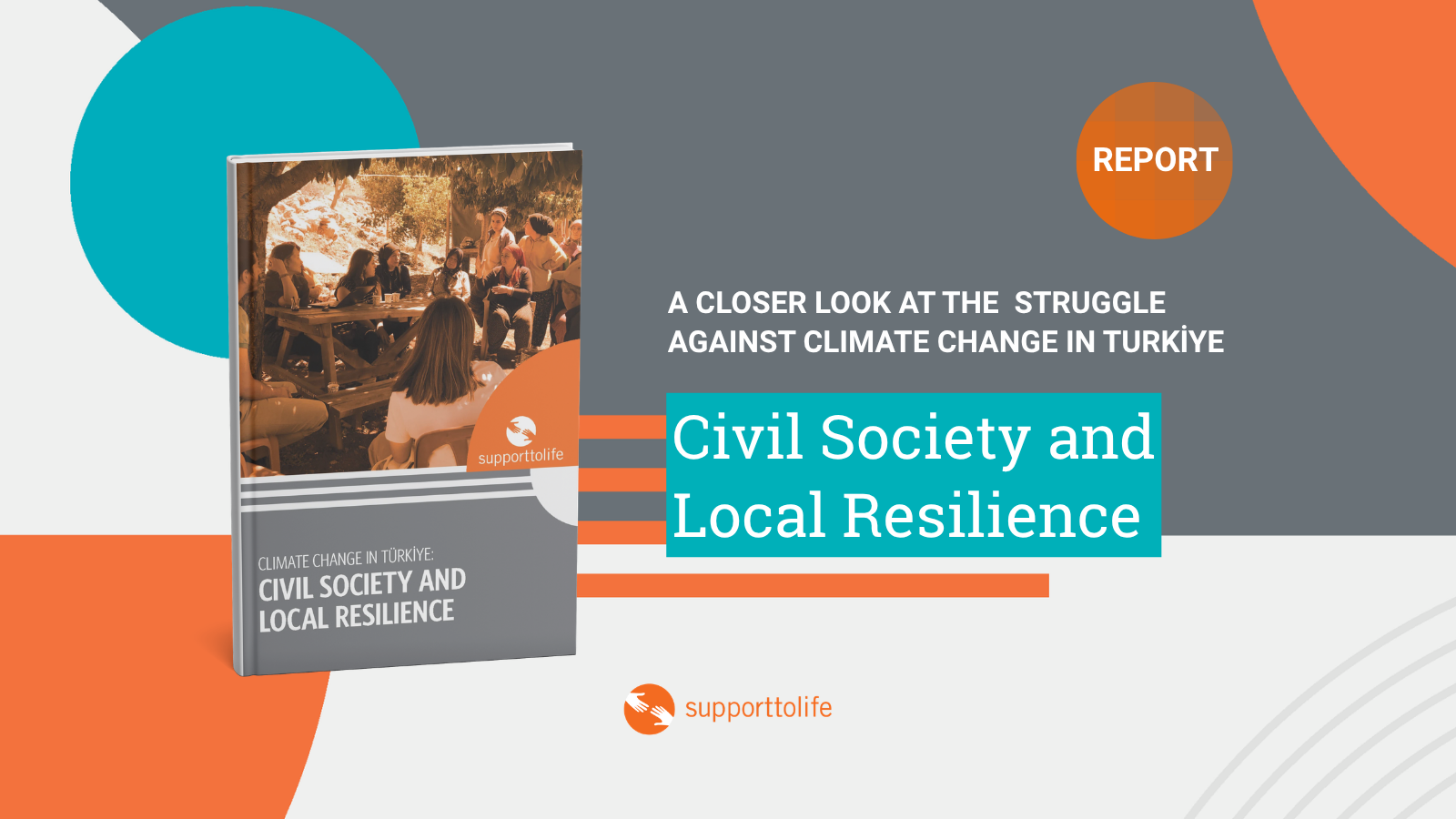
The climate crisis in Türkiye is no longer a ‘distant threat’: Our report on civil society and local resilience has been published.
We have published our new report, which highlights both the national-level policies and practices related to climate change in Türkiye and the concrete impacts on local communities’ lives: ‘Climate Change in Türkiye: Civil Society and Local Resilience’.
The report compiles the findings of two complementary studies we conducted in 2025:
- The desk study “Climate Change in Türkiye: No Longer a Distant Threat” examines Türkiye’s climate policy framework, mitigation/adaptation debates, and its intersection with the humanitarian aid sector.
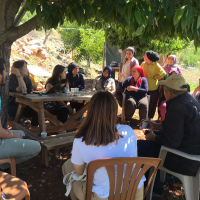
- Through the “Impacts of Climate Change in the Earthquake Region” focus group discussions, the report details how farming communities in Adıyaman, Hatay, and Kahramanmaraş are experiencing the climate crisis and striving to adapt.
Key Findings from the Report
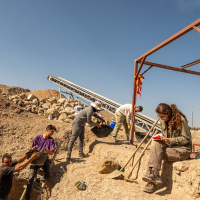
- Field findings clearly demonstrate that rural life in the earthquake-affected region has become increasingly vulnerable to the climate crisis: participants emphasize that effects such as drought, the depletion or contamination of water sources , irregular rainfall, and frost are making production more difficult; in some areas, access to water sources has deteriorated further following the earthquake.
- Survey results reveal that climate change remains a “new” agenda item for many NGOs; nevertheless, a significant portion of these organizations believe their projects contribute to adaptation and mitigation. However, a critical need for support in the areas of climate finance and technical capacity is highlighted.
- The report emphasizes that civil society plays a crucial role in bridging the gap between national strategies and on-the-ground realities: trust-based relationships with communities, access to the field, and operational agility are critical for climate adaptation and disaster risk reduction.
What do we recommend?
Based on field-based recommendations and analysis, the report highlights the following key areas:
- Strengthening water management and irrigation infrastructure, and scaling up solutions such as drip irrigation and rainwater harvesting,
- Developing early warning and local risk management mechanisms,
- Protecting and diversifying livelihoods against agricultural losses (especially for women and small-scale producers),
- Transferring resources, authority, and capacity to the local level to ensure national strategies are implementable locally, and strengthening community participation.
In Türkiye, climate change is a concrete problem that is increasingly damaging the national economy and threatening the livelihoods and lives of civil society. The government, academia, development agencies, humanitarian aid actors, and farmers—the contribution of every actor is crucial.
Thank you for reading the article and for coming this far. Now you can support life while you are here.