The employment and revitalization project we are continuing at the Karkamış archaeological site demonstrates just how creative a humanitarian aid organization can be within the framework of sustainable development.
Located in the southeastern part of Gaziantep, near the Syrian border, Karkamış is a small, quiet town. Though little remains of its former grandeur from thousands of years ago, it is actually one of Türkiye’s most unique cultural heritage sites.
Thanks to its strategic location along the Euphrates River, Karkamış served as a major settlement and trade center for thousands of years. It was one of the region’s most powerful cities, particularly during the Bronze and Iron Ages. Following the collapse of the Hittite Empire, it became the capital of a prominent kingdom during the Late Hittite period and maintained its importance well into the Middle Ages.
However, this rich heritage had long gone unrecognized. Karkamış is now far removed from its days as a trade hub; it has become a place where young people are forced to go to Gaziantep - the nearest major city- to find work, and the elderly, as one local put it, “run up a tab for tea and sit in the café.” But now, new employment opportunities are being discussed here.
Employment in the Archaeological Site
We prioritize long-term and sustainable development solutions in the regions affected by the February 6 earthquakes; access to livelihoods is a key component of these solutions.
Together with our strategic partner Diakonie Katastrophenhilfe (DKH), our ongoing project in Adıyaman, Hatay, Gaziantep, Karkamış, and Kahramanmaraş has four main objectives: to enhance communities’ resilience to disasters, strengthen their disaster risk reduction capacities, promote adaptation to climate change, and support the fulfillment of basic needs through sustainable livelihoods. Our work in Karkamış significantly contributes to the fourth objective and is being carried out in partnership with the Gaziantep Governorship, the Karkamış District Governorship, and the Gaziantep Provincial Directorate of Culture and Tourism.
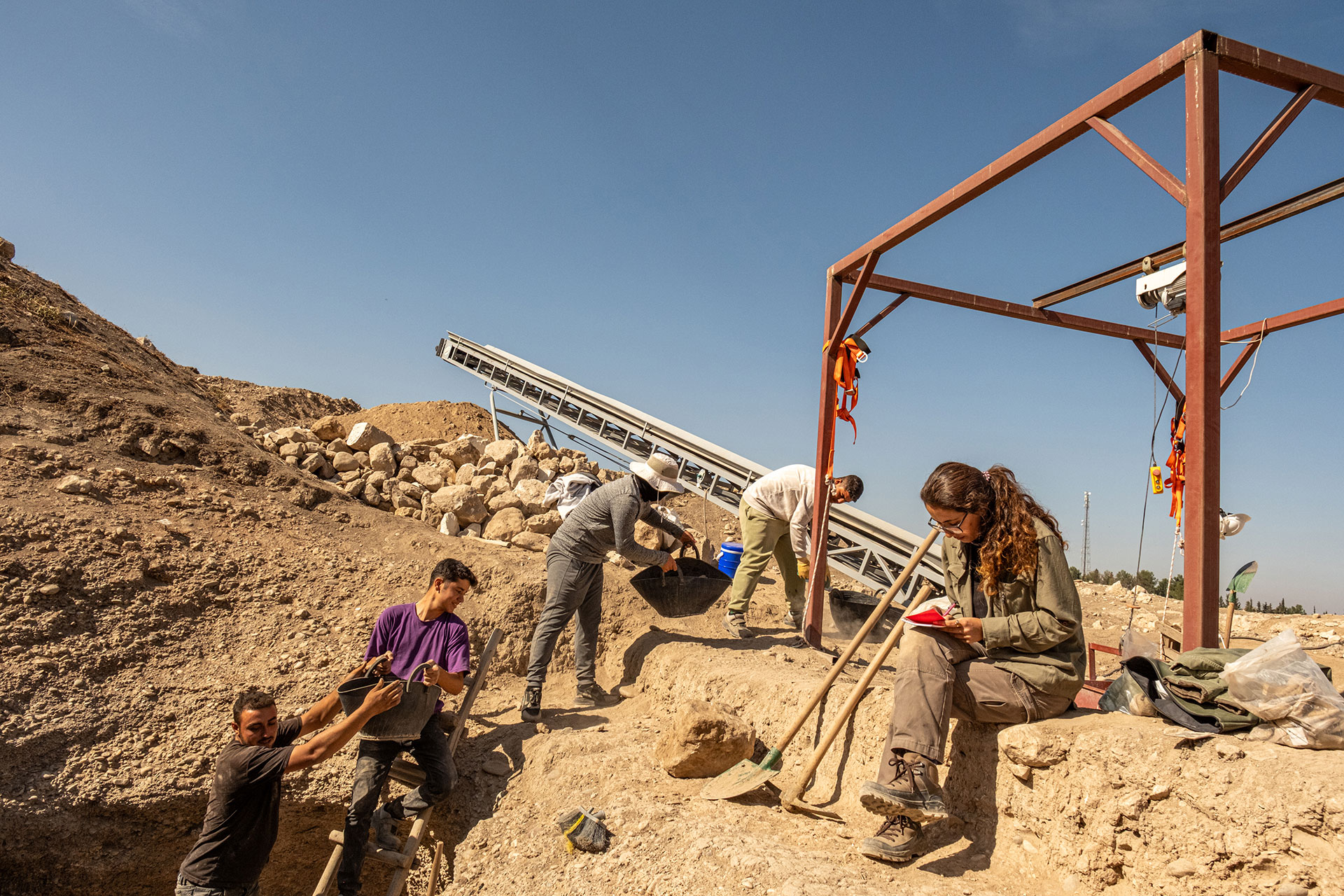
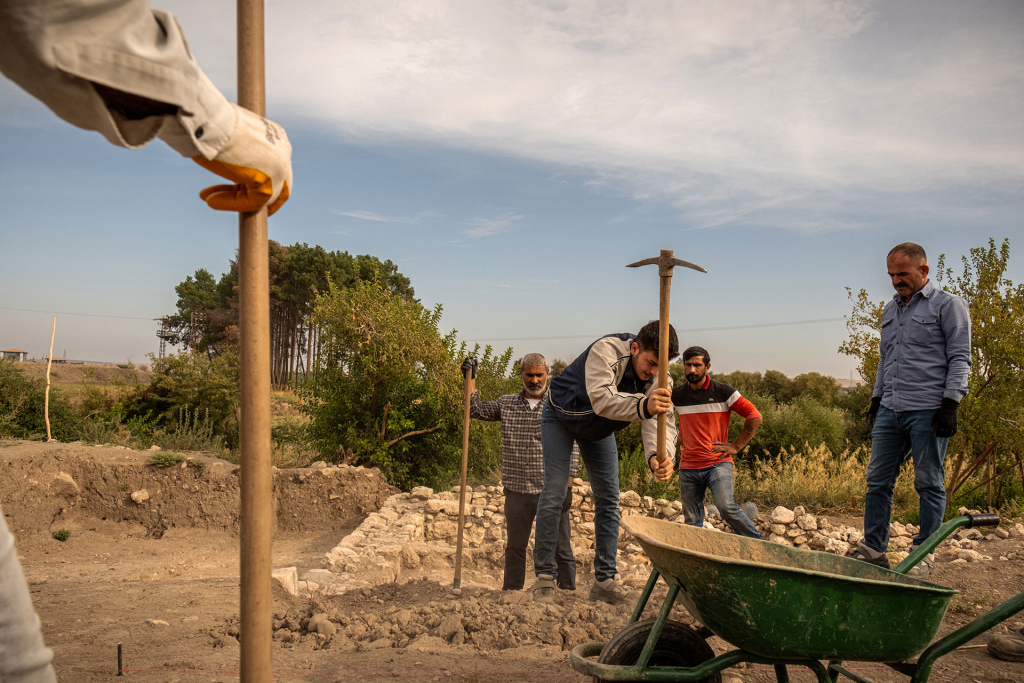
We are employing 20 excavation workers at the ongoing archaeological site and contributing to the restoration of the abandoned historic train station.
Intensive work continues at the archaeological site. The region’s geography, which first began to be excavated in the 1900s, shaped its destiny. First World War and conflicts in various periods caused the excavations to progress slowly. The second excavation phase began in 2011 with an Italian team; the third phase, which began in 2024, is still ongoing.
From Father to Son
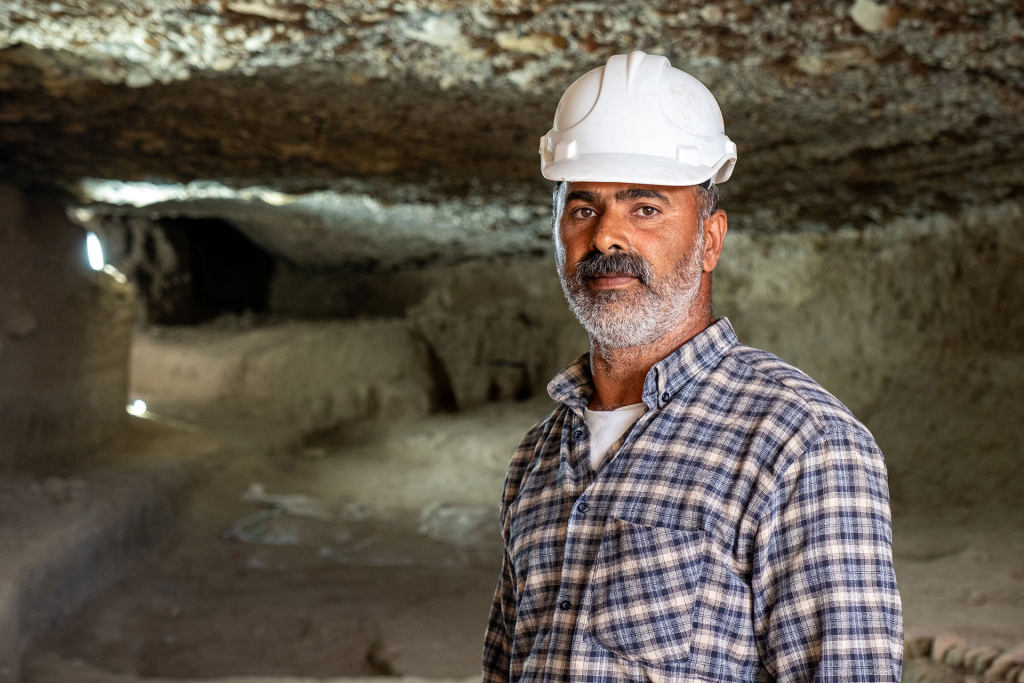
Mehmet, one of the workers at the archaeological site, used to work in daily labor and in the fields. As a local of the region, he says he didn’t really know the archaeological value of this area before; “but after turning 50, I developed a curiosity about this place. It’s wonderful to be involved in work related to history.”
This curiosity clearly runs in the family; his 19-year-old son, who worked in the site for a short time during the summer, passed the university entrance exam and was admitted to the Archaeology Department at Nevşehir University; “He’s in his first year,” Mehmet says, his eyes sparkling with pride.
In Karkamış, sources of income are limited and seasonal. The district produces pistachios; however, the harvest gathered in the summer barely sustains households’ winter economy; “Now, thanks to this work, we can earn money even in the winter,” Mehmet explains.
Both Income and Skill
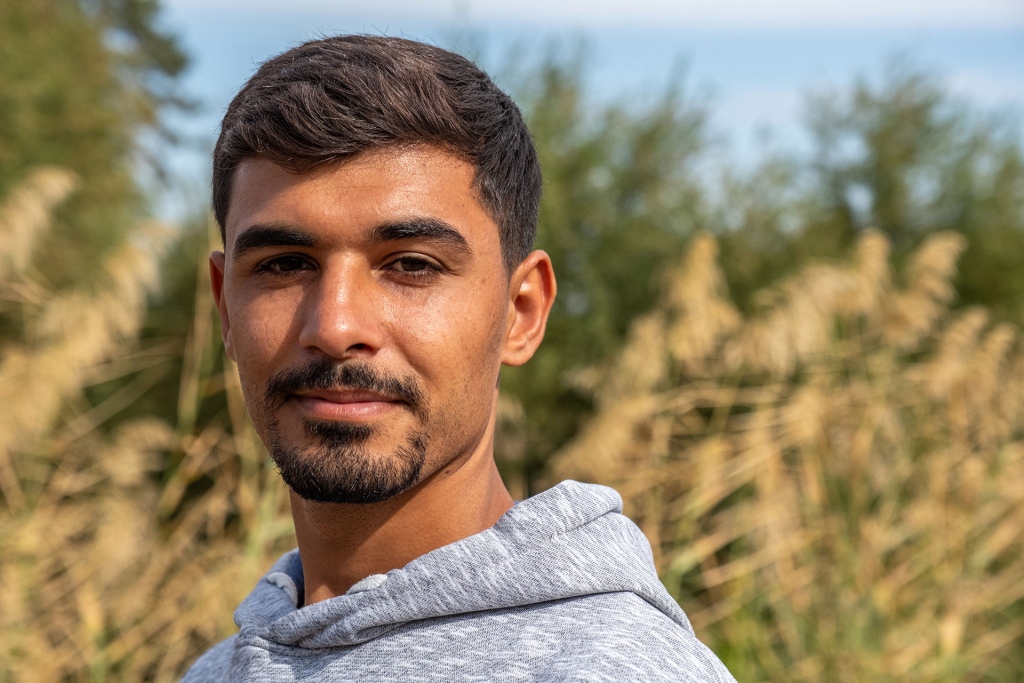
Abdullah, a 22-year-old working at the excavation site, is among those who, like his peers, would have had to go to Gaziantep to find work. He views this new job, which he’s been doing for four months, as a kind of “investment”: “I’m earning money, and I’ve learned this trade; maybe I can work at other excavation sites later—in that sense, it’s been good for me to learn.”
Contributing to Cultural Heritage
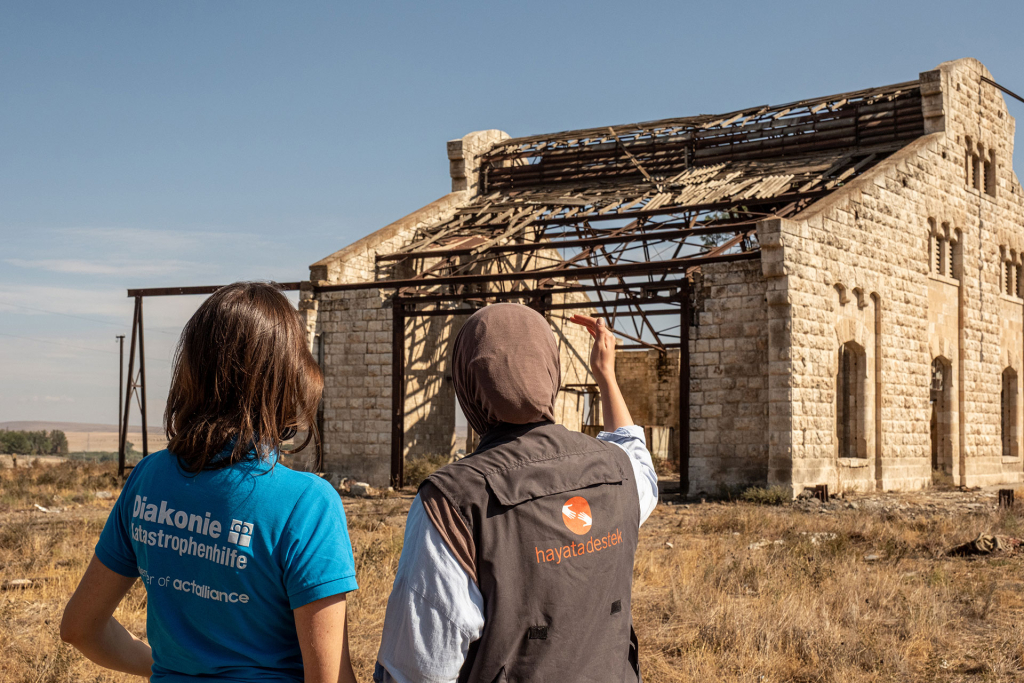
Both the people of Karkamış and the enthusiastic archaeology team working in the region share a common dream: for excavations to continue at the ancient city of Karkamış; for this area to become an “archaeopark” stretching from the archaeological site to the historic train station. It would serve as both a tourist attraction and a contribution to the region’s livelihoods and cultural heritage. We support this vision as well; we are carrying out the roof restoration of the hangar at the historic train station, with plans to transform it into a digital memory museum. Additionally, as part of the project, our plans include supporting women’s groups engaged in local production and designing spaces to facilitate the sale of their products.
Historical artifacts from the Hittite period unearthed at the Karkamış archaeological site continue to be exhibited at the Museum of Anatolian Civilizations in Ankara. The shared vision is for some of the artifacts excavated from this site to be exhibited right here in Karkamış. Why shouldn’t one step toward realizing this vision be the use of the historic hangar—currently undergoing restoration—as a museum?
This initiative in Karkamış brings together the preservation of cultural heritage with social and economic empowerment; while honoring Karkamış’s past, it contributes to building a stronger local community.
Gözde Kazaz
Communication Expert at Hayata Destek / Karkamış
Thank you for reading the article and for coming this far. Now you can support life while you are here.