Deepening socio-economic challenges in the earthquake-affected region, combined with disruptions in access to healthcare services, continue to make daily life more difficult. Rena* and her daughter, who live in Hatay, are among those navigating these hardships.
Living in Türkiye for 14 years, 36-year-old Rena divorced her first husband after seven years of marriage due to domestic violence. Her daughter from that marriage, Eslem, is now five years old. Three years ago, Rena married Azer, and her second child was born last year.
“I sensed from an early age that something was different,” Rena says about her eldest daughter. For a long time, she tried to understand what that difference was. Eslem does not speak and struggles to sleep at night. Her favorite activity — and the one she spends most of her day doing — is swinging in a swing hung in the middle of the room while watching cartoons.
Rena’s concern for her daughter gradually turned into a persistent search for solutions. “My eldest daughter never spoke. I reached out to many institutions to understand her condition,” she explains. Azer adds that because Eslem requires constant care at home, he has been unable to maintain regular employment. Instead, he works on a daily wage basis at a local workshop whenever work is available, trying to financially support the family.
Diagnosis and Hope
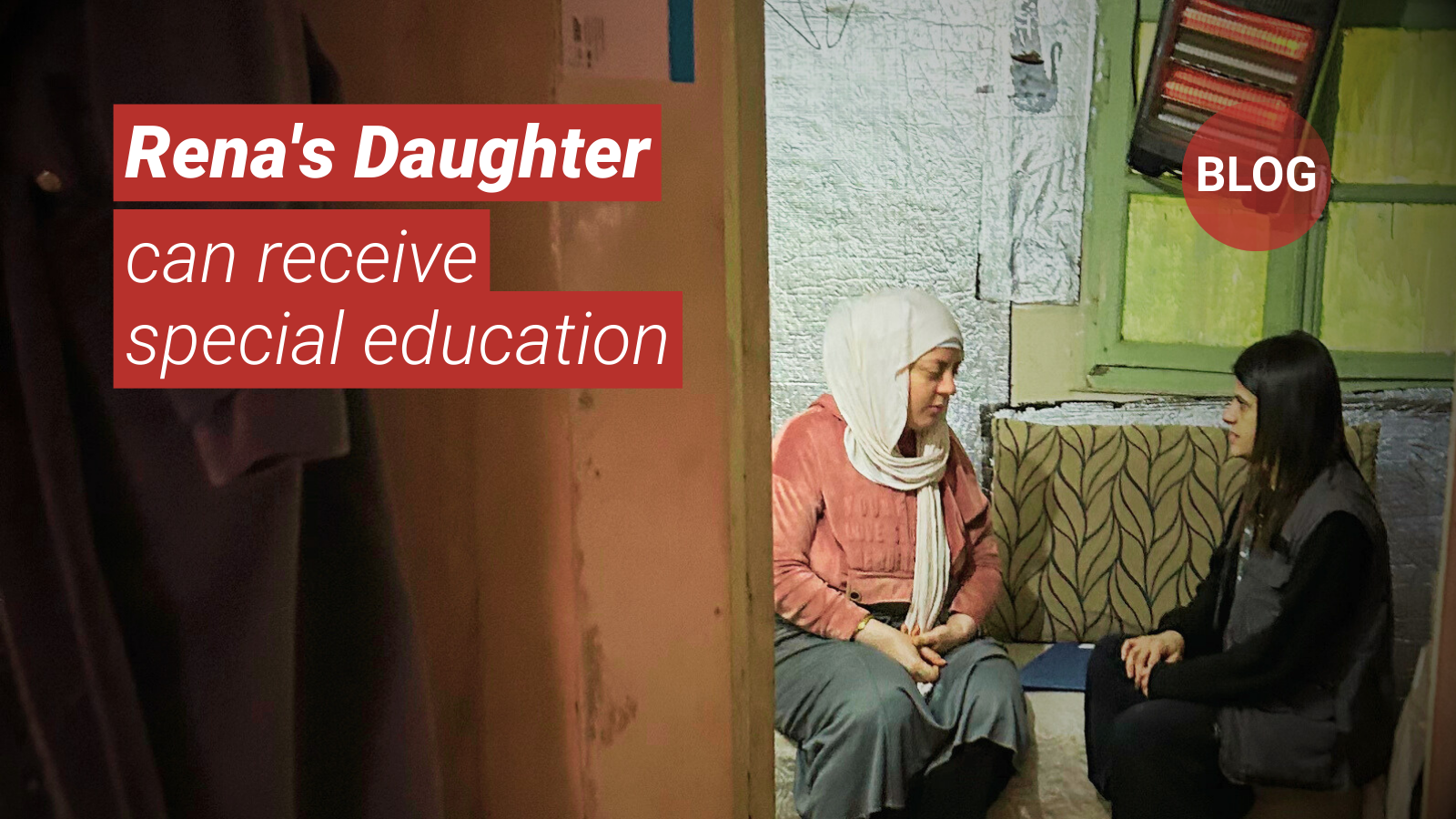
Rena first heard about Support to Life from neighbors in the container settlement where they relocated after the earthquake. When the family reached out to our team while seeking support with hospital procedures, their primary priority was to obtain a diagnosis for their daughter and ensure that her care process could be managed properly. Our social work team initiated a comprehensive case management plan.
Within the scope of the project implemented in Hatay, Şanlıurfa, and Mardin with the support of the European Union and in partnership with the Danish Refugee Council (DRC), our protection team provided health accompaniment services to help the family navigate bureaucratic barriers and hospital appointment procedures that they were unable to overcome on their own.
Following medical examinations, Eslem was diagnosed with autism. With the issuance of a 40% disability report, her access to rights and services was formally recognized.
At the same time as the diagnosis, medication support was initiated, and she was referred to the Counseling and Research Center (RAM). Through this referral, Eslem will be able to attend a school for children with special needs.
Today, the family’s economic conditions remain challenging. Yet Rena says, “All I need is for my daughter to have a better life.” The uncertainty of previous years has now been replaced by a structured support plan carried out under the guidance of specialists.
As Support to Life, through our integrated protection interventions, we continue to support refugees in vulnerable situations — like Rena and her daughter — to overcome barriers once thought impossible and access essential services.
*Names have been changed for protection reasons.
Yasin Almaz
Communications and Fundraising Officer
Editor: Gözde Kazaz
Communications Specialist
Thank you for reading the article and for coming this far. Now you can support life while you are here.