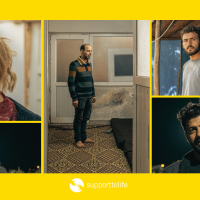
We are participating in COP31, to be held in Antalya, by sharing the experiences of the communities most deeply affected by the climate crisis.
MESSAGES WE WILL BRING TO COP31
1. Climate adaptation starts with communities.
A September 2026 report by the United Nations Environment Programme (UNEP) revealed that the 1.5°C threshold will be exceeded. Reducing emissions is more urgent than ever, but reduction alone is not enough. We must take measures against the profound impacts of climate change.
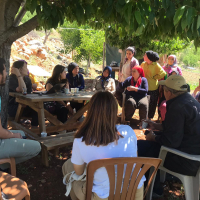
We are working with communities in 17 villages in Adıyaman, Hatay, and Kahramanmaraş to reduce the risk of climate-related disasters. Communities identify their own climate and disaster risks and decide for themselves which evidence-based actions make sense for them: rainwater harvesting, drought-resilient agriculture, alternative irrigation, early warning systems, solar energy, and forest fire preparedness… All of these are designed and implemented by the communities themselves.
Those who live with climate risks every day must have a say in decisions about how adaptation will take place.
2. There is no single solution to climate adaptation.
In villages, volunteer committees identify their own risks and design their own solutions. Since conditions vary from one community to another, adaptation measures must be based on the local knowledge, priorities, and lived experiences of the people most affected.
In Yaylacık, Adıyaman, Türkiye where drought has affected livelihoods, the community has prioritized raising awareness about drought. In Pınarbaşı, also part of the same city, the community has opted for drainage measures and land stabilization to protect against floods and landslides.
Adaptation yields the best results when it is grounded in local risks, vulnerabilities, priorities, and knowledge.
3. Climate change is not merely an environmental issue; it also disrupts livelihoods.
When drought affects agricultural production, climate adaptation becomes a matter of livelihood. When floods damage farmland, it becomes a food security issue. And when extreme heat and water scarcity increase the strain on households, it becomes an economic and social issue.
Climate resilience, ultimately, ensures that people can continue to live, work, and lead a dignified life in the places they call home.
4. Adaptation is closely linked to disaster preparedness.
The best response to a climate-related disaster must be provided long before the disaster strikes. In the villages where we work, communities are not waiting for the next fire, flood, or drought. In Aknehir and Yanıkpınar, Hatay, Türkiye, communities are setting up their own solar-powered early warning and communication systems; securing their energy supply; and investing in solutions before the next crisis strikes.
Climate adaptation is not just about responding better. It’s about preparing better.
5. Climate leaders are local communities.
Climate leadership doesn’t come solely from institutions; it arises from community decisions: sometimes a village committee, sometimes a group of women, and sometimes a farmer deciding how to adapt to drought.
In Büyük İmalı, Kahramanmaraş, Türkiye, women developed a plan to strengthen the village’s capacity to prepare communal meals during emergencies.
Climate leadership is not a process that flows from institutions to communities; it is a process that flows from communities to institutions.
6. When it comes to climate finance for adaptation, communities cannot only be beneficiaries.
The global financing gap for adaptation exceeds $300 billion annually. Closing this gap begins with locally-driven, finance-ready solutions that are investment-worthy through both the public and private sectors. In 17 villages across Türkiye, communities have put exactly this into practice: costed, locally owned, and scalable solar energy systems, water infrastructure, and early warning networks.
These actions require resources. When discussing climate finance and adaptation, communities should not remain merely beneficiaries of the system
Communities must be recognized as actors in climate action and supported with resources accordingly.
Communities aren’t waiting. Nor should funding.
You can follow our work at COP31 on our social media accounts and use the hashtags #AdaptationForLife #COP31, #LocalClimateAction, #ClimateAdaptation, and #DisasterRiskReduction to raise your voice for local climate action.
OUR COP31 EVENTS
United Nations Türkiye Pavilion OCHA Pop-Up Panels / Blue Zone
Title: Building the Climate Implementation Bridge: Scaling Community Action for Risk Reduction and Climate Change Adaptation
Date: November 18, 2026
Time: 9:30–10:30
Organizers: Support to Life and Diakonie Katastrophenhilfe
The panel addresses the entire chain that the “Climate Action Bridge”—one of the main themes of COP31—aims to establish: starting with locally driven climate adaptation practices, through the transition from science to policy, and up to the supportive elements that link local climate actions with financial commitments. The process will be discussed using examples from Türkiye, India, and Bangladesh.
Moderator: Sema Genel Karaosmanoğlu, Director of STL
Speakers:
Pınar Emine Gökgün, General Coordinator, STL
Juliate Keya Malakar, Director, Christian Commission for Development in Bangladesh (CCDB)
Avantika Goswami, Program Manager for Climate Change and Green Economy, Center for Science and Environment (CSE), India
Martin Kessler, Director, Diakonie Katastrophenhilfe (DKH)
United Nations Turkey Pavilion OCHA Pop-Up Panels / Blue Zone
Title: Building Bridges: From Community-Led Climate Action to Investable Local Resilience in Türkiye
Date: November 19, 2026
Time: 9:30–10:30
Organizers: Support to Life and Diakonie Katastrophenhilfe
The panel, which will address how the community-led adaptation process unfolds in Türkiye and how the transition from pilot projects to investable solutions is made, will discuss municipal climate planning and the roles that international partners can play in linking local climate actions with climate finance.
Moderator: Sema Genel Karaosmanoğlu, Director of STL
Speakers:
Pınar Emine Gökgün, General Coordinator, STL
Süleyman Üçel, Director of Urban Planning and Development, Union of Turkish Municipalities (TBB)
Aslıhan Hatunoğlu, Climate Change Advisor, GIZ Türkiye
Martin Kessler, Director, Diakonie Katastrophenhilfe (DKH)
UN Side Events / Blue Zone
Title: The Global Localization Forum: Addressing Gaps in the Implementation of Climate Disaster and Energy Democracy
Date: November 13, 2026
Time: 9:30–10:30
Location: Side Event Room 6 - KATİP ÇELEBİ
Organizers: Connected Advocacy for Empowerment and Youth Development Initiative (Connected Advocacy), Clean Climate and Environment Campaign Initiative (CCAECI)
The session will discuss strengthening climate resilience, reducing disaster risk, and advancing energy democracy through locally led initiatives in the Global North and Global South.
Speakers:
Sema Genel Karaosmanoglu, Director of STL
Prof. Mickey Glantz, CEO of Climate Affairs USA,
Prince Israel Orekha, Director of Connected Advocacy,
Titi Akosa, ED, Center for 21st Century Issues
TÜSEV Panel / Green Zone
Title: Philanthropy for the Future: Climate Commitments and Collective Action
Organizer: TÜSEV
Date: Wednesday, November 18, 2026
Time: 12:30–1:15 p.m.
Thematic Day: Humanitarian and Social Development
Venue: Green Industrialization, Green Area
Türkiye’s experience in building a national philanthropy for climate movement and fostering collective action through the Türkiye Commitment
Moderator Sema Merve İş, Deputy Secretary General for Strategy and Programs, TÜSEV, Güneş Engin | Secretary General, Third Sector Foundation of Türkiye (TÜSEV)
Speakers:
Sema Genel Karaosmanoğlu, Direktor, Support to Life
Pedro Boca, International Affairs and Public Policy Coordinator, GIFE
Walid Nagy, Deputy Director & Network and Relationships Director, Arab Foundations Forum
Zero Waste Foundation Panel / Green Zone
Title: “Who Is Left Out of Zero Waste?”
Date: Wednesday, November 18, 2026
Time: 4:15–5:00 p.m.
Location: Zero Waste Area
Moderator: Semra Sevinç
Müge Yamanyılmaz, Program Manager of the STL, will participate as a speaker.
Thank you for reading the article and for coming this far. Now you can support life while you are here.