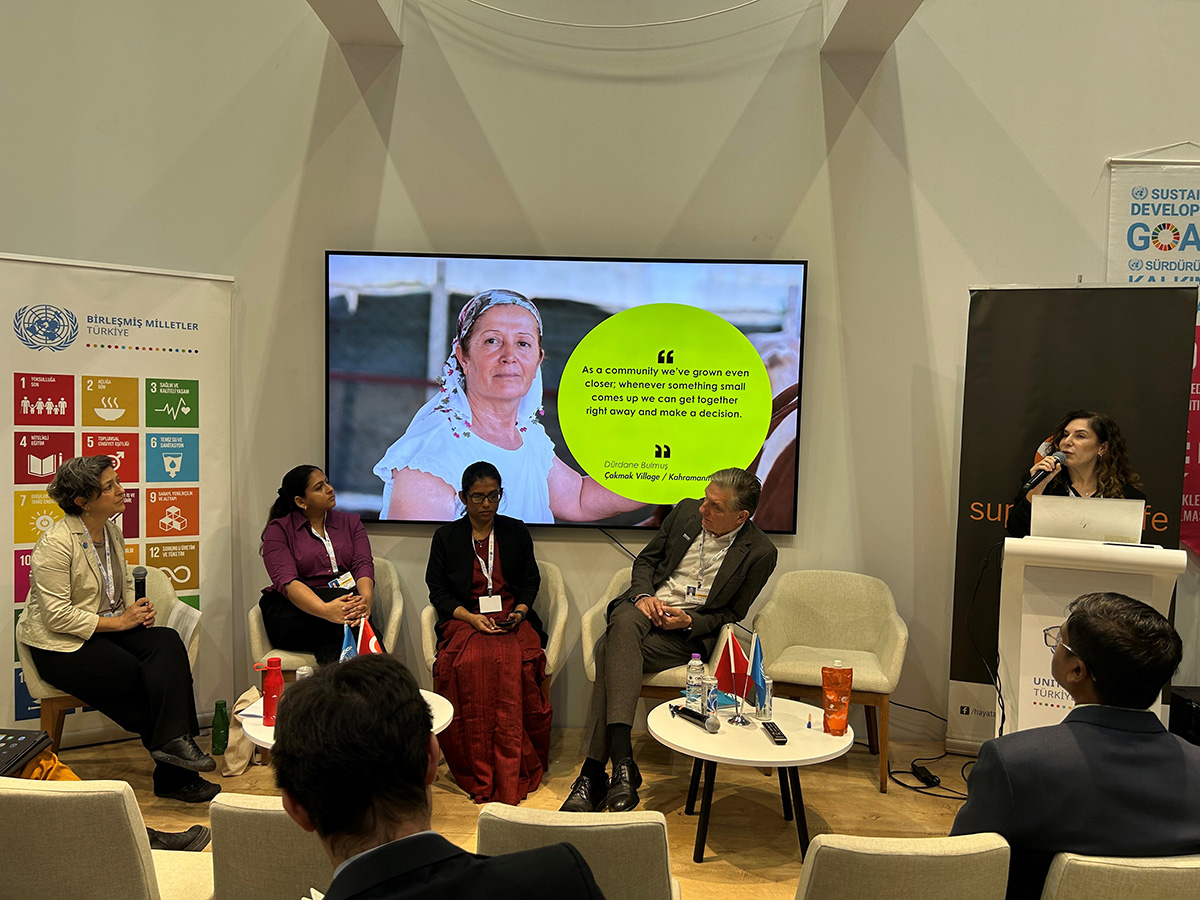
At COP31, Support to Life (STL) and Diakonie Katastrophenhilfe (DKH) hosted two back-to-back panels at the UN Office for the Coordination of Humanitarian Affairs’ (OCHA) Pop-Up Humanitarian Hub in the UN Türkiye Pavilion. On the first day, we looked at the global picture through experience from different regions; on the second, we focused on Türkiye.
Much of the work of adapting to the climate crisis is carried out by communities on its front line and the local organisations that work alongside them. Yet only a small share of adaptation finance ever reaches them. Our two panels at COP31 on 18 and 19 November set out to explore this contradiction: how can solutions developed by communities themselves become lasting, and how can they find their way into public plans and budgets?
18 November: The Global Picture
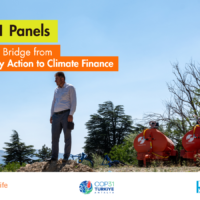
The first panel, “Building the Climate Implementation Bridge: Scaling Community Action for Risk Reduction and Climate Change Adaptation”, brought together organisations working with communities in Türkiye and Bangladesh, an independent research centre from India, and DKH, which channels public and private funding to its local partners.
Our Director and moderator Sema Genel Karaosmanoğlu opened the session with a stark figure: according to the Adaptation Gap Report, adaptation needs stand at US$305 billion a year, yet less than a tenth of that is actually mobilised.
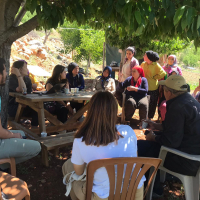
Our Operations Coordinator Pınar Emine Gökgün described our work in 17 villages affected by the 2023 earthquakes, which are now also contending with drought, floods and wildfires. She noted that the approach does more than reduce risk: it also strengthens solidarity within the villages. Flexible funding is becoming ever more decisive in making this possible.
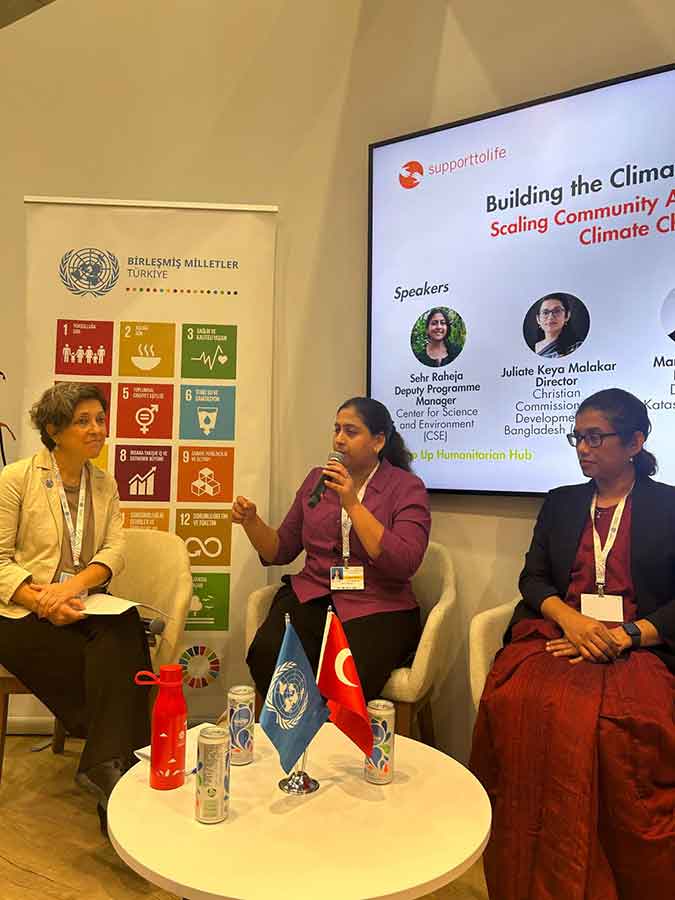 Juliate Keya Malakar, Director of the Christian Commission for Development in Bangladesh (CCDB), explained how her organisation has moved from emergency relief to long-term resilience in coastal areas where cyclones threaten farming. For her, community-led adaptation means local institutions having a real say in their own adaptation processes. Malakar stressed that finance must be accessible and flexible, and that loss and damage must become measurable.
For Sehr Raheja, Deputy Programme Manager at India’s Centre for Science and Environment (CSE), adaptation needs and data are already well known; what is missing is money. Noting that more than 94 per cent of India’s adaptation finance comes from the country’s own budget, Raheja said the biggest problem is that approving funds takes years. She added that adaptation done well is simply good development: safer housing, stronger infrastructure and long-term planning.
DKH Director Martin Kessler highlighted the possibilities opened up by flexible donations from the German public, and described DKH’s advocacy for greater flexibility in public funding as well.
The discussion also turned to why so little finance reaches the local level: lengthy approval processes, the limits of blended finance for adaptation, and the need for new sources as humanitarian funding shrinks. Panellists also asked what new initiatives such as COP31’s Climate Implementation Bridge would add to the national platforms and intermediaries that already exist.
19 November: Local Solutions from Türkiye
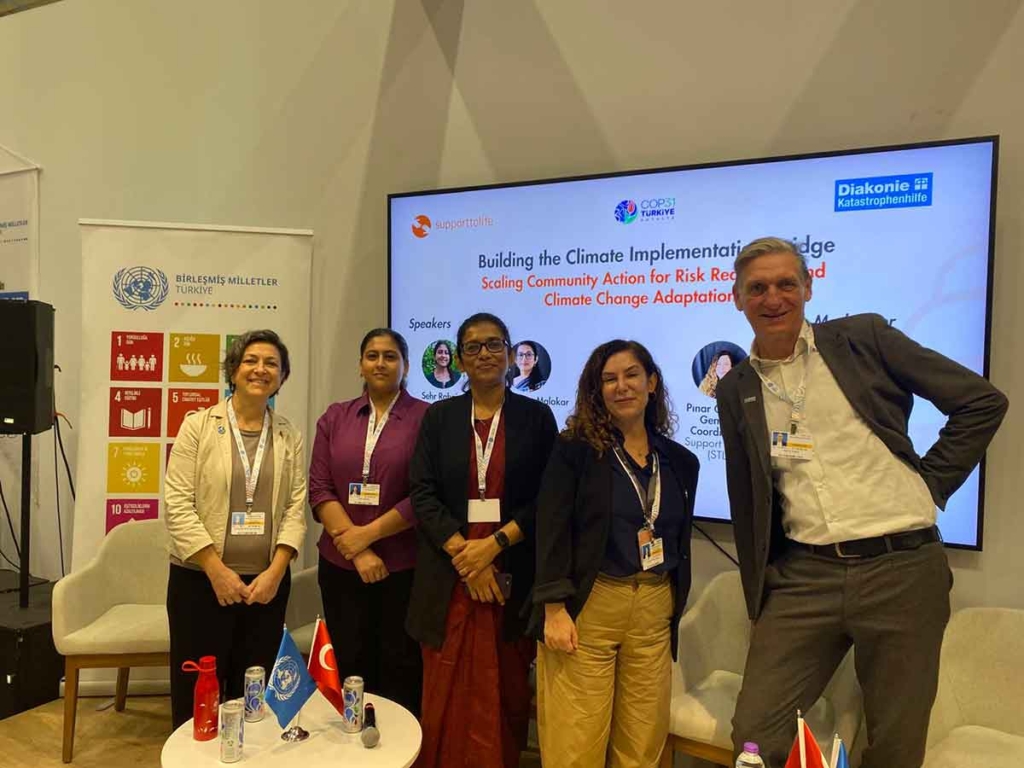
On the second day, at the panel “Building the Bridge: From Community-Led Climate Action to Investable Local Resilience in Türkiye”, we brought the global debate to Türkiye. Alongside STL and DKH, the speakers included Süleyman Üçel of the Union of Municipalities of Türkiye (TBB) and Aslıhan Hatunoğlu of GIZ Türkiye.
The panel’s question was closely tied to Türkiye’s Climate Law, which entered into force on 9 July 2025. Under the law, every province must prepare a local climate change action plan with municipalities at its heart. So how can the priorities that communities set for themselves find their way into these plans?
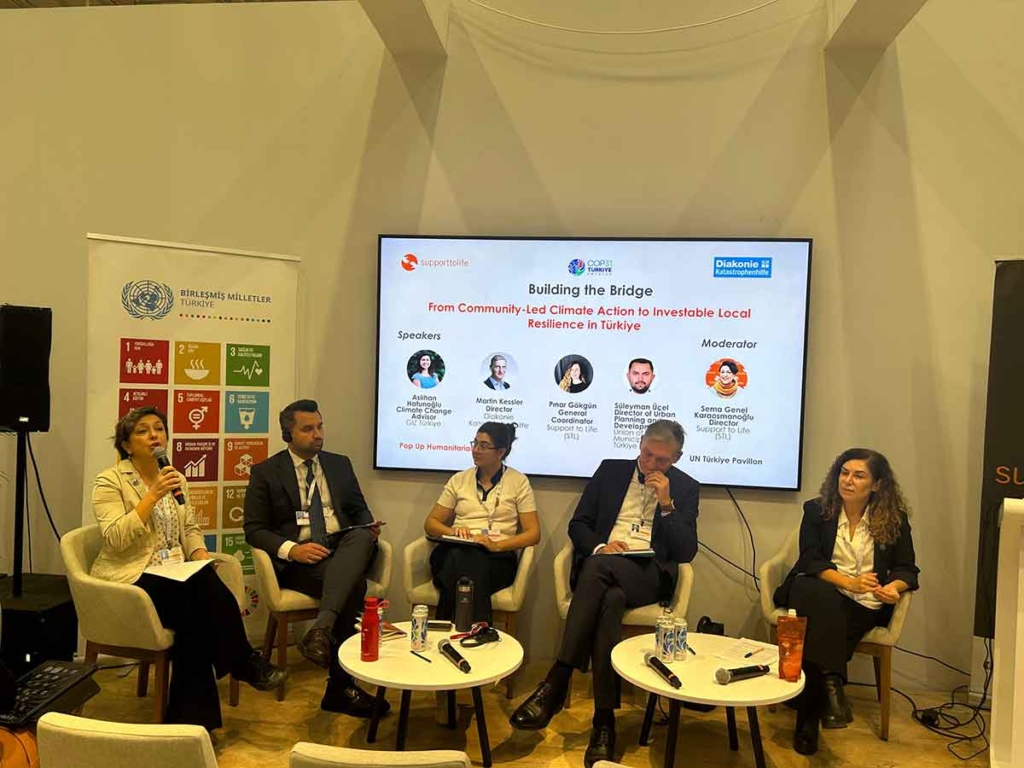
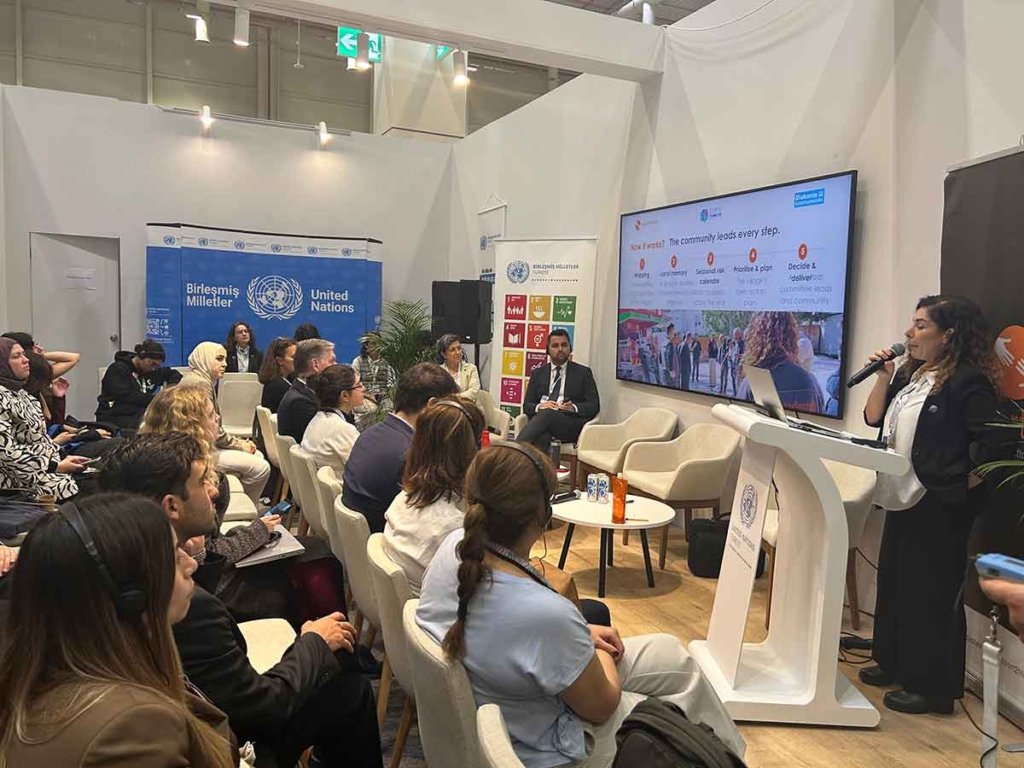
Pınar Emine Gökgün shared the method we use in the villages. Each village maps its own vulnerabilities and capacities, draws a 50-year disaster timeline from local memory and a seasonal risk calendar, and then, led by its village committee, sets its priorities, plans, budgets and delivers.
Martin Kessler explained that DKH has traditionally carried out relief and reconstruction projects lasting six months to a year, which covers only part of the picture. DKH is now shifting its funding towards preparedness, emergency response planning and disaster risk reduction, working with more flexible funds and in closer cooperation with public institutions and development actors. Süleyman Üçel reminded participants that every municipality in Türkiye is a member of TBB, which represents them nationally and internationally, and drew attention to municipalities’ responsibilities and the financing gap they face.
The speakers discussed the capacity gaps municipalities face in taking on this new responsibility, and the absence of a dedicated funding source for municipalities under the law. Among the ideas that stood out was that addressing adaptation together with mitigation, biodiversity, local businesses and insurance can make it easier to attract finance.
The Shared Message: Lasting Change Runs Through Sustainable Plans and Budgets
The common conclusion of both days was clear: as droughts, floods and wildfires compound one another across Türkiye, humanitarian investment turns into lasting resilience only when local solutions become part of public plans and budgets.
We carried this message to other platforms during COP31 as well. On 19 November, at the session “From Climate Priorities to Investment-Ready Municipal Projects” hosted by the Directorate for EU Affairs, Sema Genel Karaosmanoğlu set out our three calls: to source data for local climate action from communities rather than from the top down, to open meaningful space for local participation, and to integrate the plans that emerge from these processes into local climate action plans.
At Support to Life, we will continue working to scale up this approach, in which communities design their own solutions, and to connect it with municipalities, public institutions and funders.
Thank you for reading the article and for coming this far. Now you can support life while you are here.