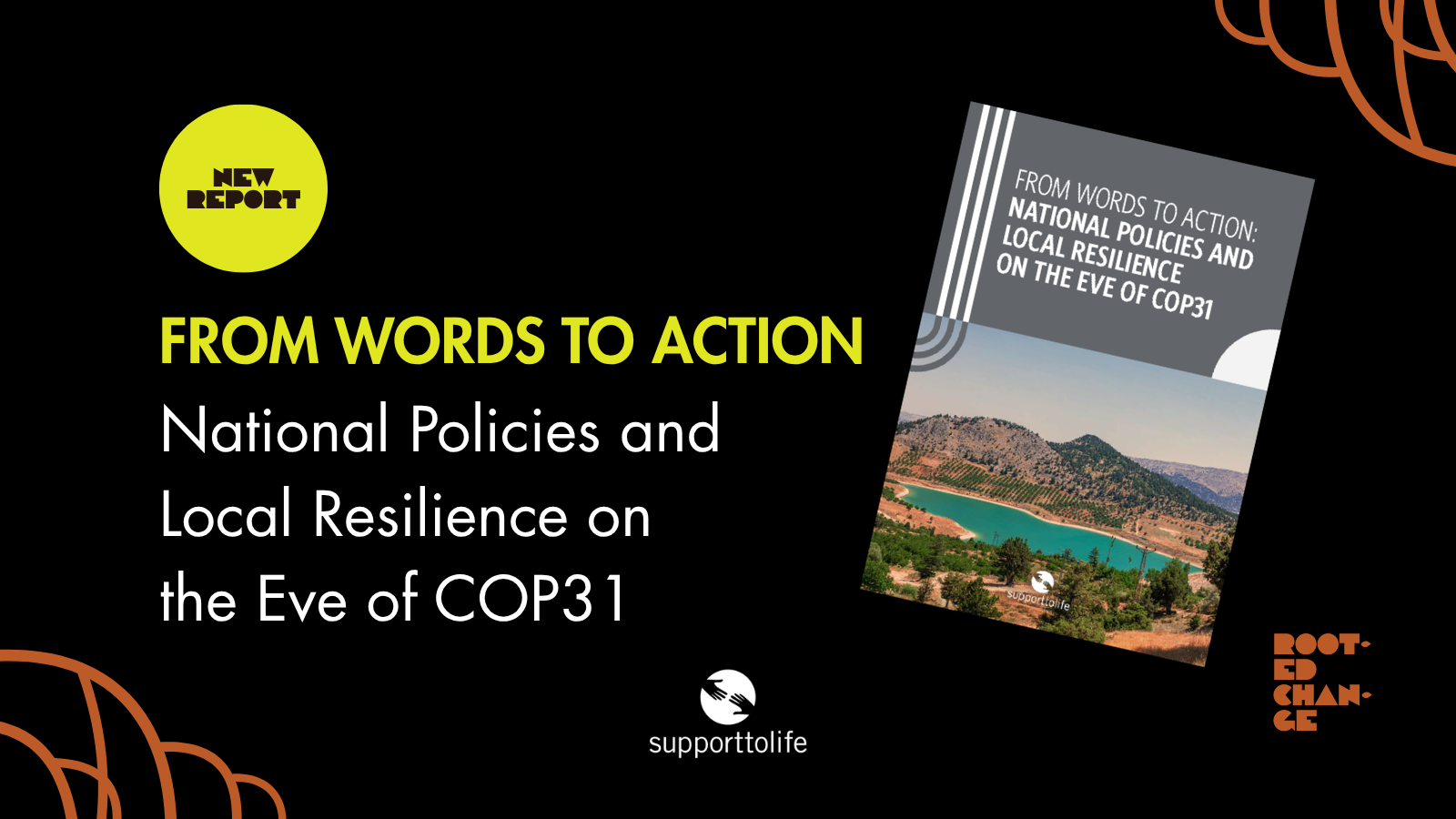
Our new report assesses Türkiye’s climate policies ahead of COP31. The report also shares the experiences of communities living with flood risks in Adıyaman, Kahramanmaraş, and Hatay.
Türkiye is preparing to host COP31 in Antalya in November 2026. During this process, the gap between national climate goals and on-the-ground realities is becoming increasingly apparent. As the Support to Life Association, we focus on this gap in our new report. The report serves as a follow-up to our 2025 study titled ‘Climate Change in Türkiye: Civil Society and Local Resilience’.
The first section of the report addresses three critical recent developments: the Climate Law that went into effect in July 2025, the Second Nationally Determined Contribution (NDC 3.0) announced in September 2025, and Türkiye’s hosting of COP31.
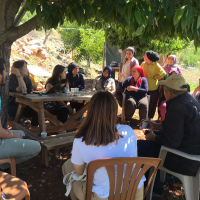
The second section is based on focus group discussions we conducted in June 2026. The discussions were held with farming communities in Adıyaman, Kahramanmaraş, and Hatay—areas affected by the February 6 earthquakes. Participants describe how floods have become more frequent and severe, causing significant damage to fields and livelihoods. The lack of an early warning system stands out as the most critical shortcoming. The burden following the floods falls largely on women’s shoulders. Children are living with the fear of floods on top of the trauma from the earthquake. For households living in containers, the floods represent a second wave of devastation.
Based on these findings, the report offers concrete recommendations:
- Community-based early warning systems capable of operating even during power outages,
- Recognition of the invisible additional labor burdens women bear during disaster response,
- Strengthening psychosocial support to help children build resilience against increasing disasters,
- Comprehensive infrastructure and superstructure planning,
- Crop diversification in agriculture.
Prepared with the support of Diakonie Katastrophenhilfe (DKH), the report aims to guide policymakers, civil society, and the public during the COP31 process.
You can access the full report here.
Thank you for reading the article and for coming this far. Now you can support life while you are here.