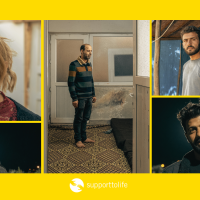
On the 3rd anniversary of the February 6 earthquakes, we continue to support psychological well-being, which is as vital as other needs.
According to official data, 53,500 people lost their lives in the February 6 earthquakes, and the lives of 14 million people across a large geographical area were negatively affected.
Thousands of people in Hatay, Kahramanmaraş, Adıyaman, and surrounding provinces are still trying to rebuild their lives. Psychosocial support remains as vital as access to shelter, basic needs, and livelihoods. This is because psychosocial support contributes significantly not only to individual recovery but also to social solidarity.
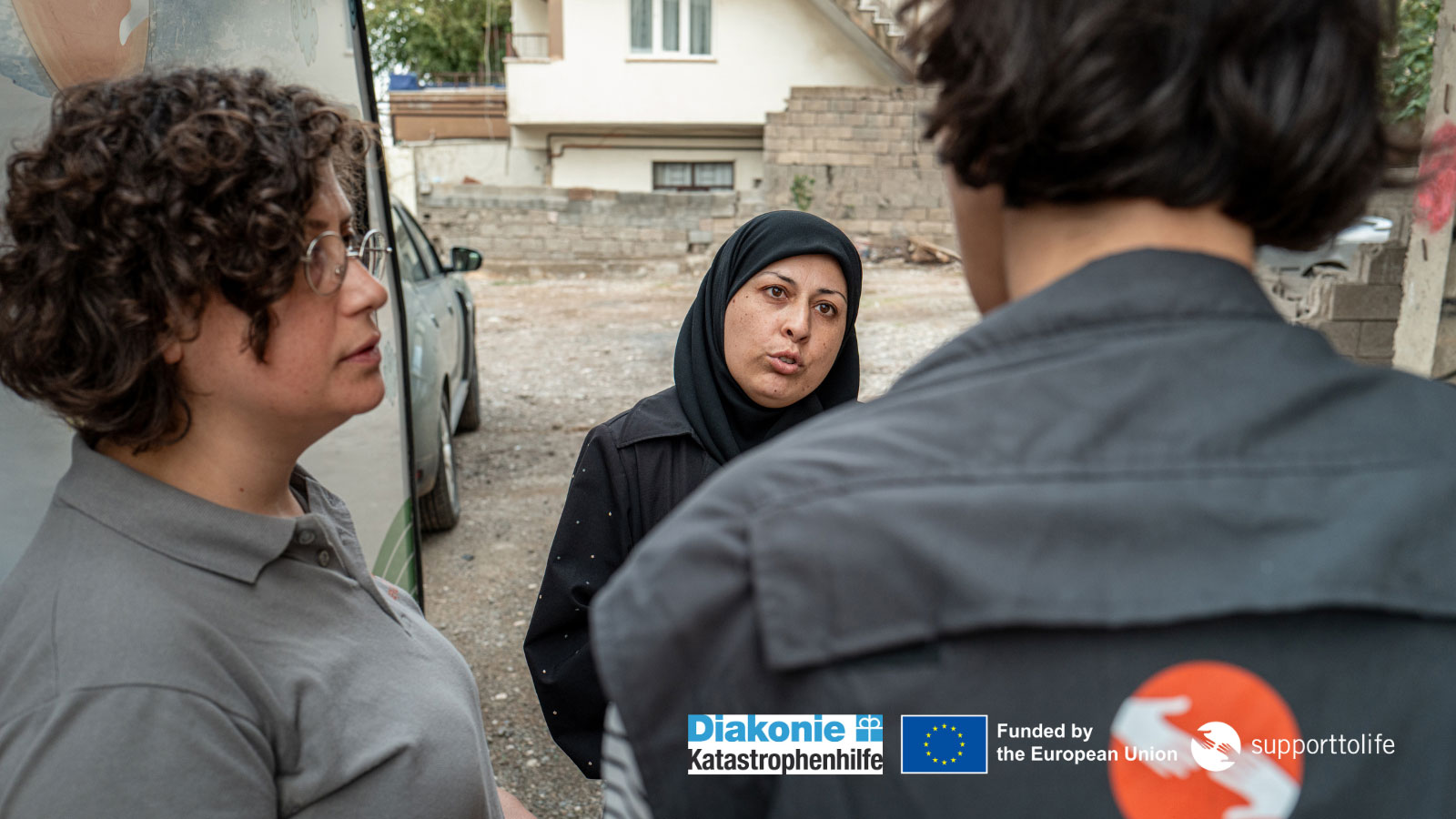
As Hayata Destek Association, one of the components of the project we are implementing in the earthquake zone with the financial support of the European Union (EU) and in strategic partnership with Diakonie Katastrophenhilfe (DKH) is precisely this: We contribute to the well-being of women both through solidarity and with the support of our experts.
Learning Together, Growing Stronger Together
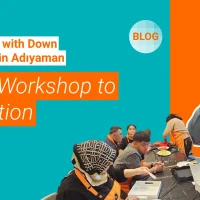
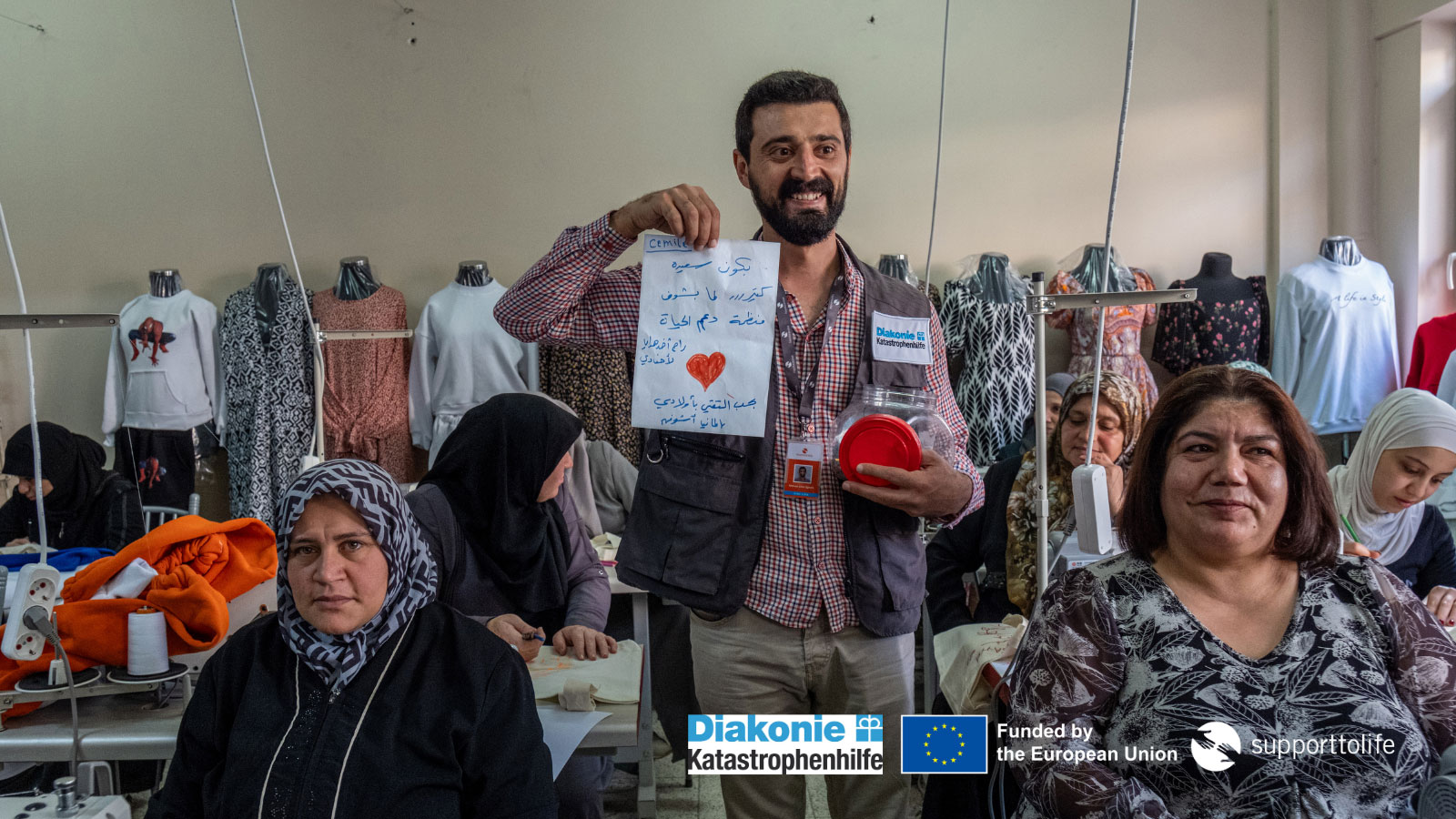
Participants in the sewing course, which has been running for 2.5 months in Kahramanmaraş, receive psycho-education sessions integrated into their livelihoods courses after each lesson. In these sessions, they strengthen their well-being and capacity to cope with problems, while also learning topics such as self-expression in the workplace and conflict resolution.
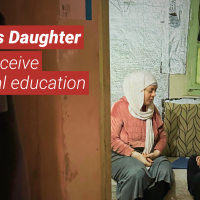
Ayşegül*, a course participant who lost her husband in the earthquake and now lives with her children in a container city, describes the impact of the course and sessions as follows:
“Being here psychologically does me good. I didn’t know any of the women here before, but now we’ve bonded.”
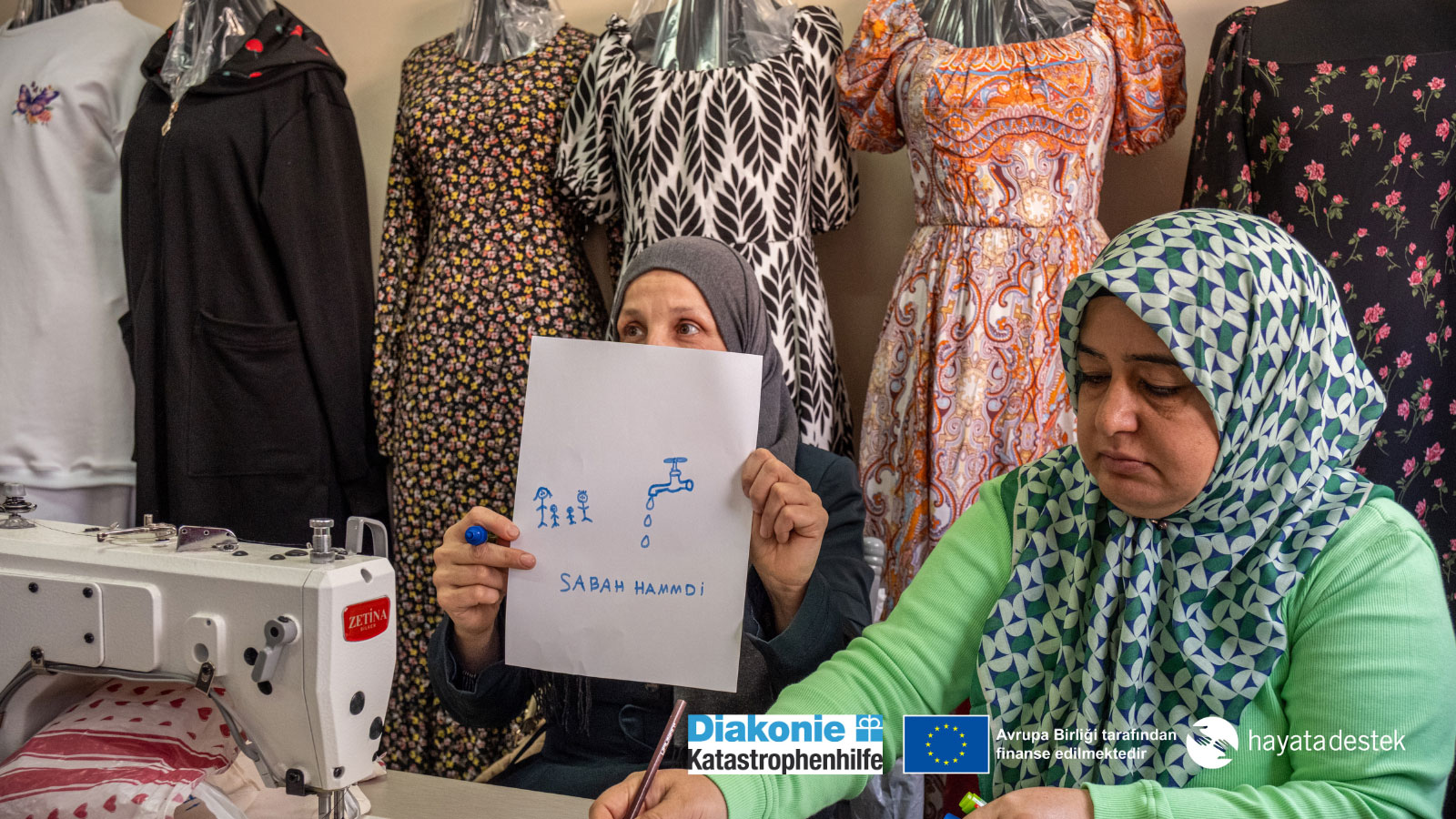
Hayriye describes how her sewing machine was buried under the rubble: "When I heard about this place, I started coming for sewing again. It's not just about learning a profession; being with other women is also very good for me."
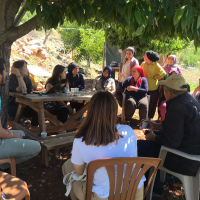
Support group sessions, like psycho-education sessions, provide spaces where women can breathe.
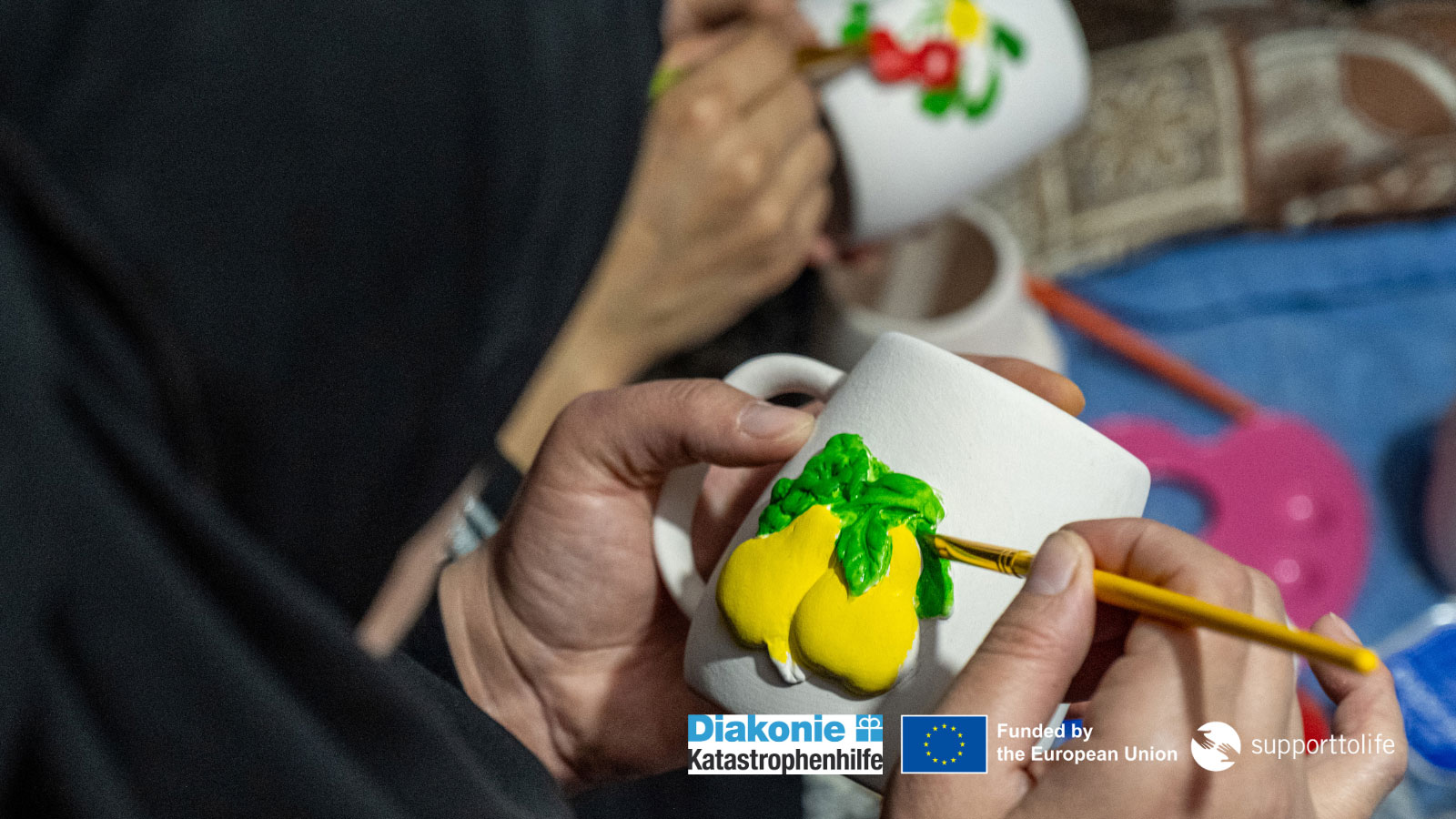
At a session where participants paint cups, Asiye says, "Everything outside of being here is very routine: Housework, cooking, taking care of children... This place makes me happy."
Ayşe, a community volunteer who facilitates women’s access to support groups, summarizes what works best for participants:
"I think support groups are best for women. Psychological support sessions, learning about their rights, especially their identity-related rights, are important for them."
Working Toward Lasting Recovery
Since our EU-funded project began in May 2025, 310 women have participated in psycho-educational sessions; 204 women have benefited from sessions following vocational courses. While 199 women came together in support groups, 80 women benefited from individual psychological services.
Additionally, through our comprehensive interventions—including cash support, protection, legal support, and informational sessions—we have supported 3,600 women over eight months.
Empowering women means healing communities. We continue to work together to heal.
*Clients' names have been changed to protect their privacy.
Thank you for reading the article and for coming this far. Now you can support life while you are here.